


Join the Conversation: Neurodiversity Inclusion & Advocacy
April is Neurodiversity Inclusion & Advocacy Month
Use the language below when posting about neurodiversity on social media. Follow Lucet to see our content and share it on your account. You can also follow the steps below to post from your own account.
Create posts on your social media accounts
- Log in to one of your active social media channels to create a post.
- Scroll below and choose your desired social post language.
- Copy the caption and paste it into your social post editor.
- Right click on the corresponding graphic below to save it to your computer, then upload the graphic to your post to accompany the caption.
- Be sure to tag @LucetHealth. To tag any organizations listed in the caption, type @ in the social post editor, then start typing the desired organization. Choose the organization you want to tag from the dropdown list of pages that appear.
- Include the following hashtag in your caption: #NeurodiversityChampions #WhatsStrongWithYou
- Post!
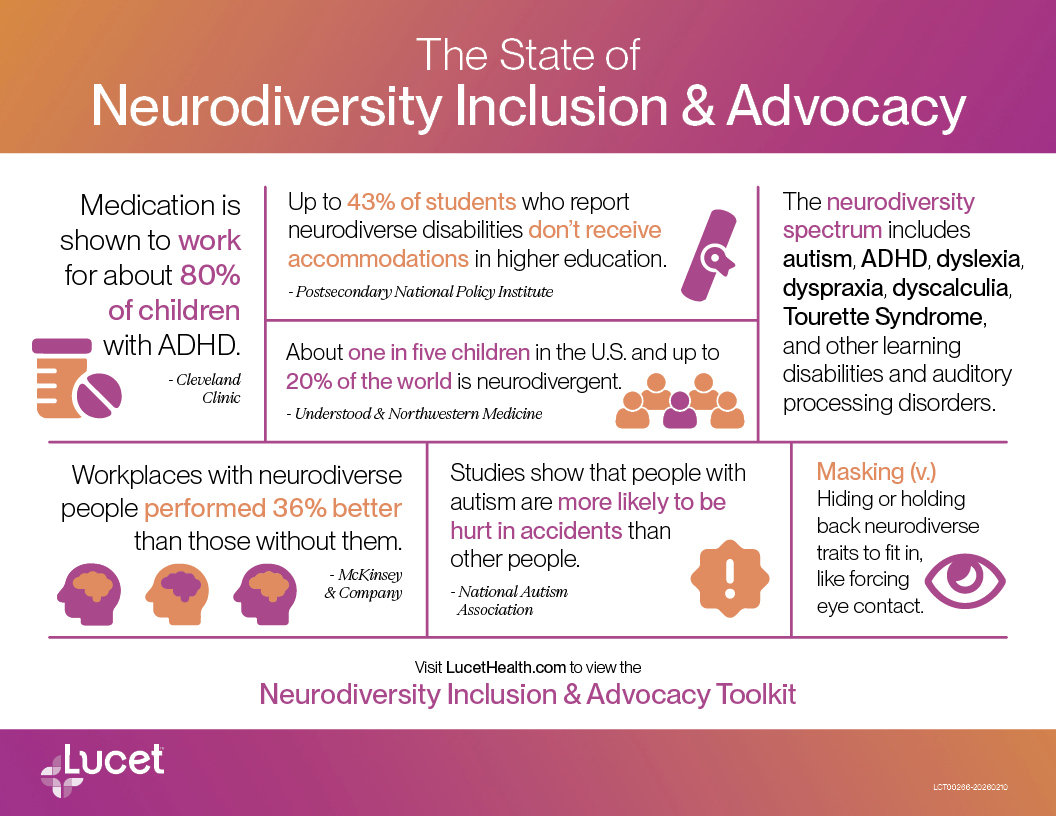
Share Infographic/Entire Toolkit
The idea of neurodiversity helps us see that there is no single “right” way for a brain to work. Neurodiversity includes many kinds of brain differences, such as autism and ADHD. These differences were once viewed only as problems, but today we know they are simply different ways of thinking. They can bring new ideas, strengths, and creativity.
In April, we recognize Neurodiversity Inclusion & Advocacy Month. Use these resources to learn more about neurodiversity and how we can support people who are neurodivergent. You can print, share or post the materials in this toolkit during April or any time of year:
resources.lucet.health/toolkit-neurodiversity-inclusion-and-advocacy
If you or someone you care about wants to learn more or thinks they may be neurodivergent, visit the Neurodiversity Education Academy for more helpful information.
#BehavioralHealth #MentalHealth #Neurodiversity #NeurodiversityChampions #WhatsStrongWithYou
Share Tips
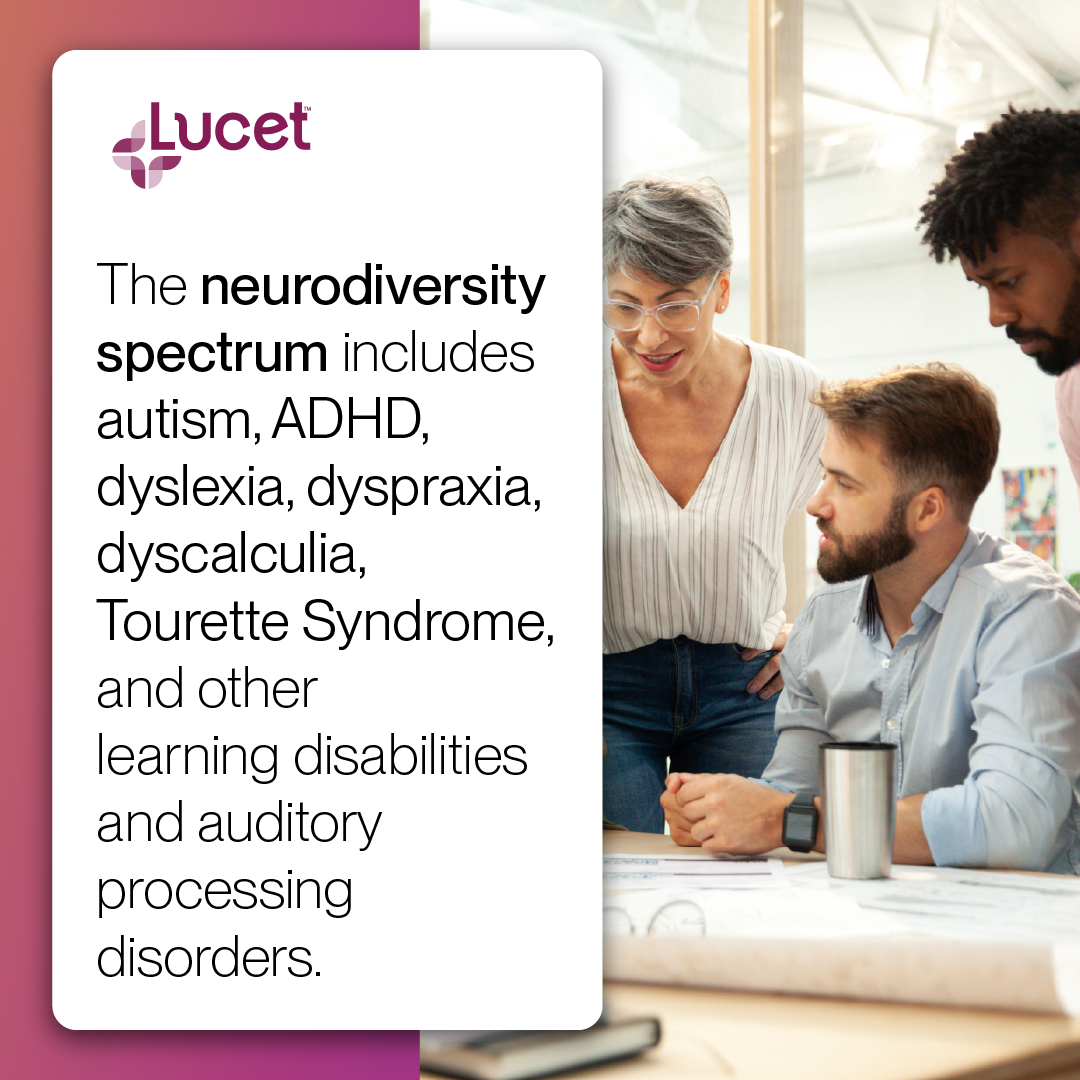
The number of people who identify as neurodivergent is growing. This includes people with ADHD, autism, dyslexia and other brain differences. Signs of neurodivergence can look different from person to person. Learning how to spot these signs and finding the right support can help children and adults succeed.
Read more about key signs to watch for and how we can best support neurodivergent individuals: resources.lucet.health/toolkit-neurodiversity-inclusion-and-advocacy/neurodiversity-know-the-signs
#BehavioralHealth #MentalHealth #Neurodiversity #NeurodiversityChampions #WhatsStrongWithYou
Understanding neurodiversity starts with knowing that differences in how people think and act are a normal part of life. As a parent or guardian, learning about common neurodivergent diagnoses can help you support your child and speak up for their needs.
Read more about the most common diagnoses and what they mean: resources.lucet.health/toolkit-neurodiversity-inclusion-and-advocacy/which-diagnoses-are-considered-neurodiverse
#BehavioralHealth #MentalHealth #Neurodiversity #NeurodiversityChampions #WhatsStrongWithYou
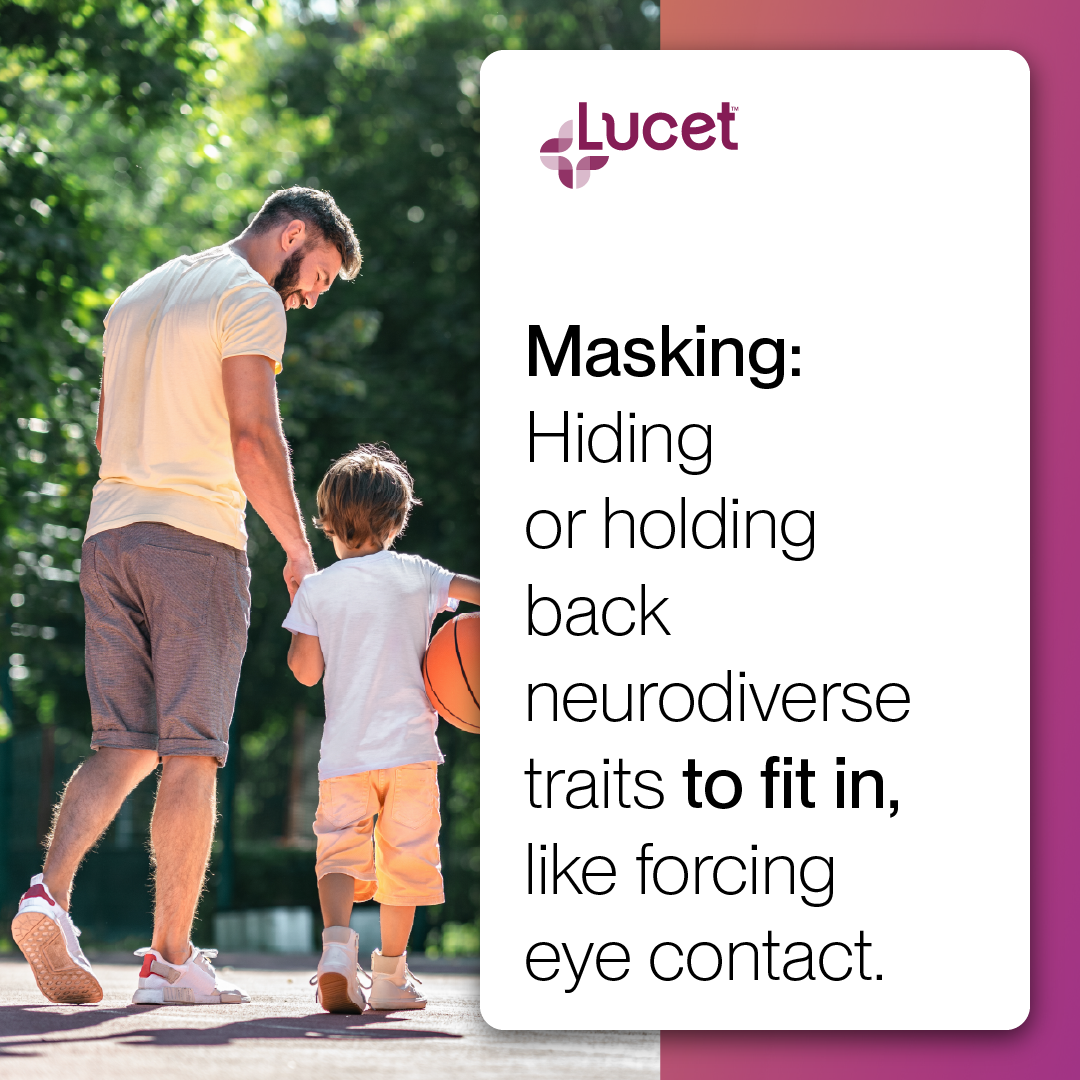
As the field of neurodiversity grows, so does the language we use to describe it. New terms and definitions are becoming more common, and understanding them can help us talk about neurodivergence with clarity and respect. Using the right words also helps us become stronger allies to neurodivergent people.
Explore key neurodiversity terms and learn what they mean: resources.lucet.health/toolkit-neurodiversity-inclusion-and-advocacy/neurodiversity-dictionary
#BehavioralHealth #MentalHealth #Neurodiversity #NeurodiversityChampions #WhatsStrongWithYou
Share Articles
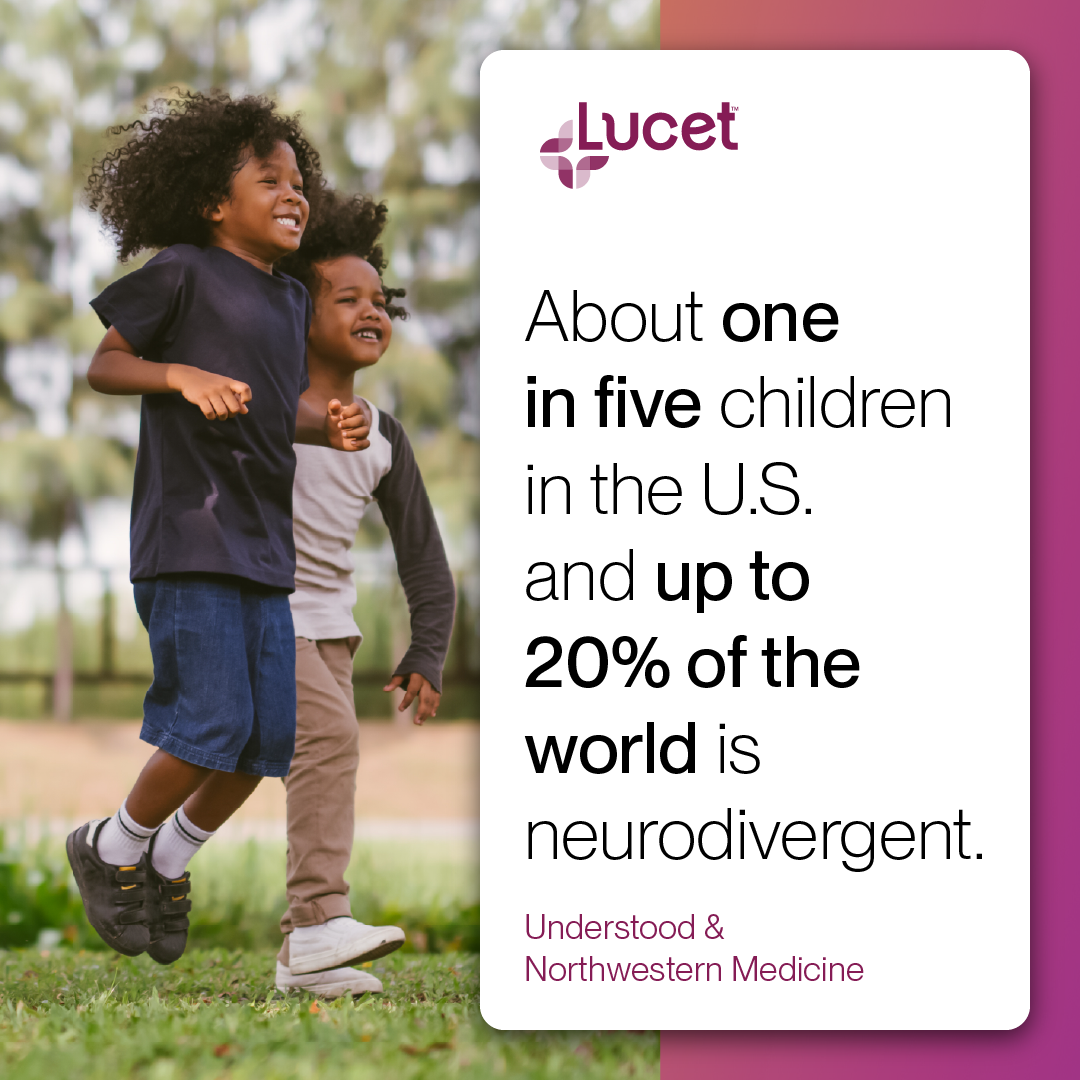
About 15–20% of people worldwide are considered neurodivergent. This group includes individuals with autism, ADHD, dyslexia, dyspraxia and other brain‑based differences. Neurodivergence is not about being “less than." It is a different way of thinking, and many people show unique strengths because of it.
Discover more about neurodiversity and how it helps us appreciate the full range of human abilities: resources.lucet.health/toolkit-neurodiversity-inclusion-and-advocacy/what-is-neurodiversity
#BehavioralHealth #MentalHealth #Neurodiversity #NeurodiversityChampions #WhatsStrongWithYou
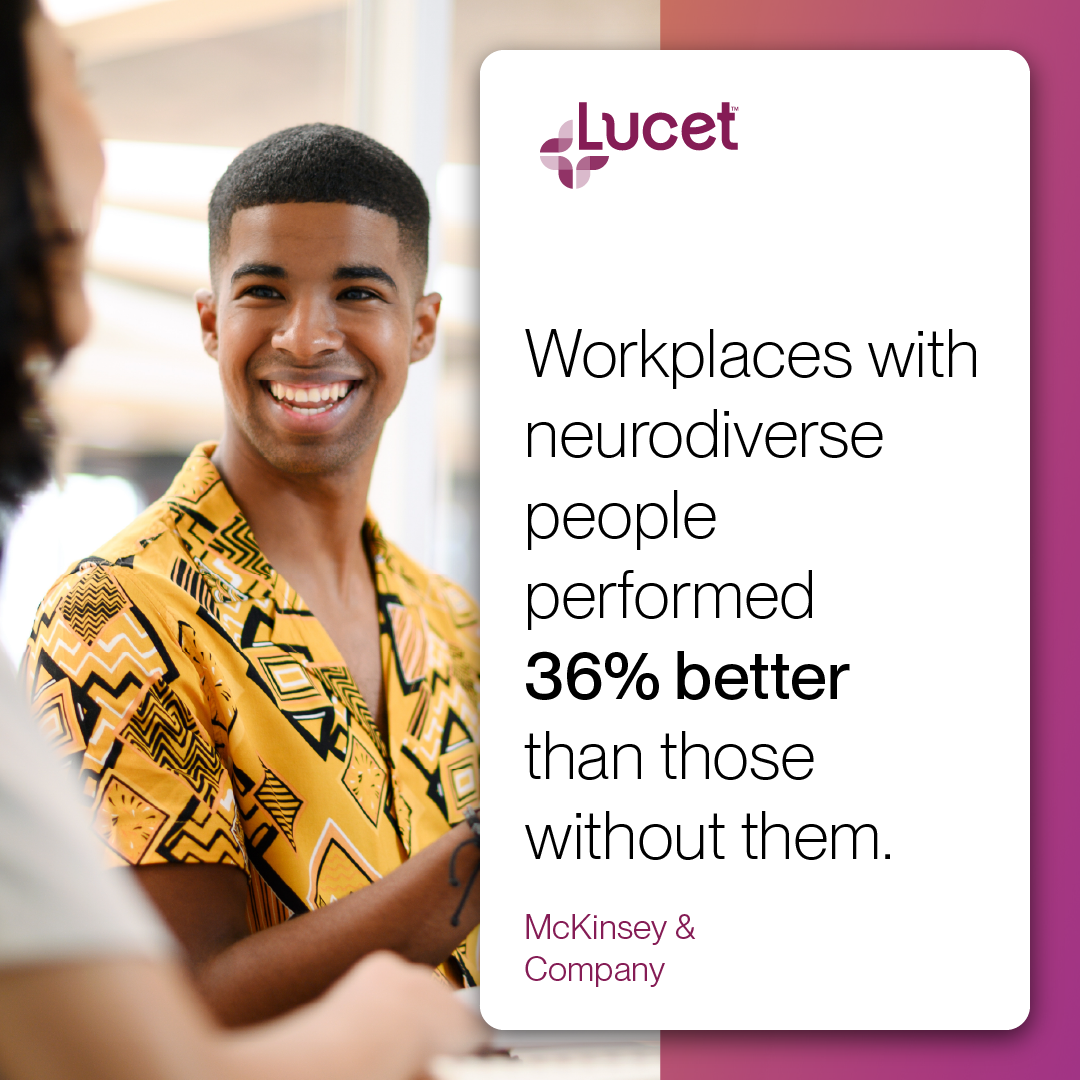
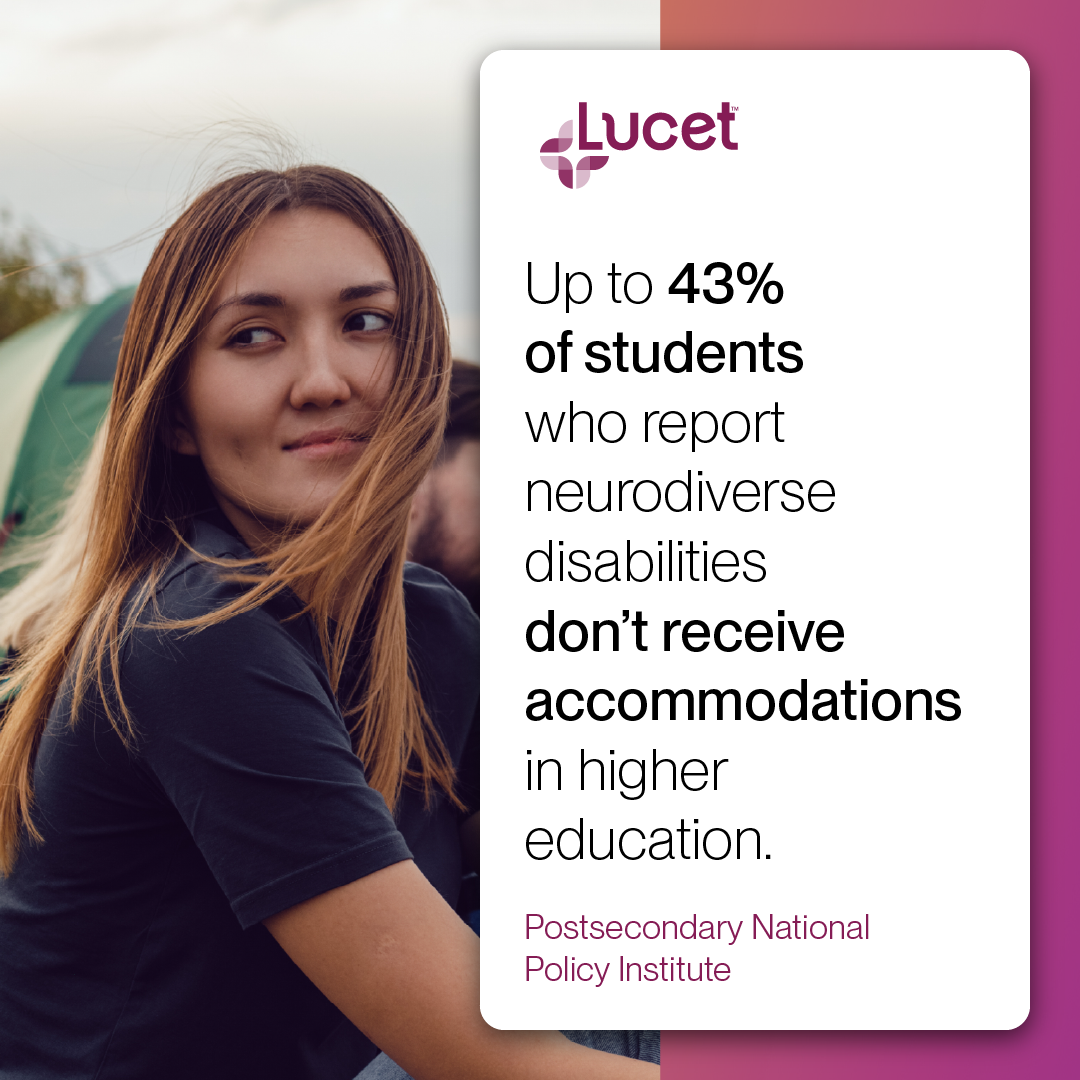
Neurodiverse people add important ideas, creativity and strengths to our communities. Parents, teachers and employers all play a role in building spaces where these individuals can succeed. It starts with learning, listening and making thoughtful changes. Even small shifts in classrooms or workplaces can make a big difference and help neurodiverse individuals feel valued and confident.
Learn more about how we can create environments where everyone can thrive: resources.lucet.health/toolkit-neurodiversity-advocacy-and-inclusion/how-to-create-an-inclusive-environment
#BehavioralHealth #MentalHealth #Neurodiversity #NeurodiversityChampions #WhatsStrongWithYou
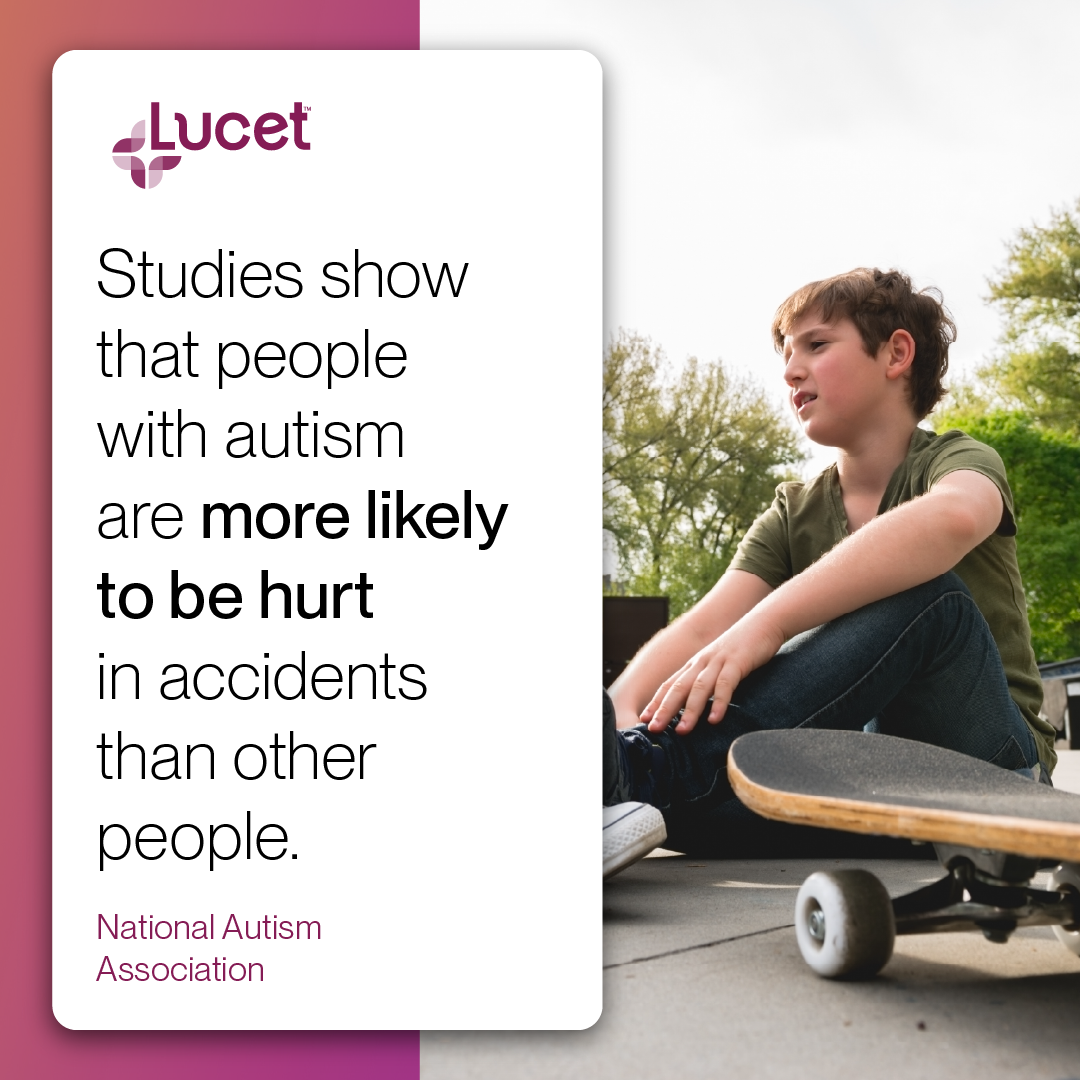
Neurodivergent individuals, especially those with autism, may face safety challenges because of differences in sensory processing, communication and awareness of danger. With supportive strategies and strong advocacy, caregivers can lower risks and help neurodivergent individuals move through the world with more confidence and security.
Learn more about reducing these safety risks: resources.lucet.health/toolkit-neurodiversity-inclusion-and-advocacy/neurodiversity-autism-and-safety
#BehavioralHealth #MentalHealth #Neurodiversity #NeurodiversityChampions #WhatsStrongWithYou
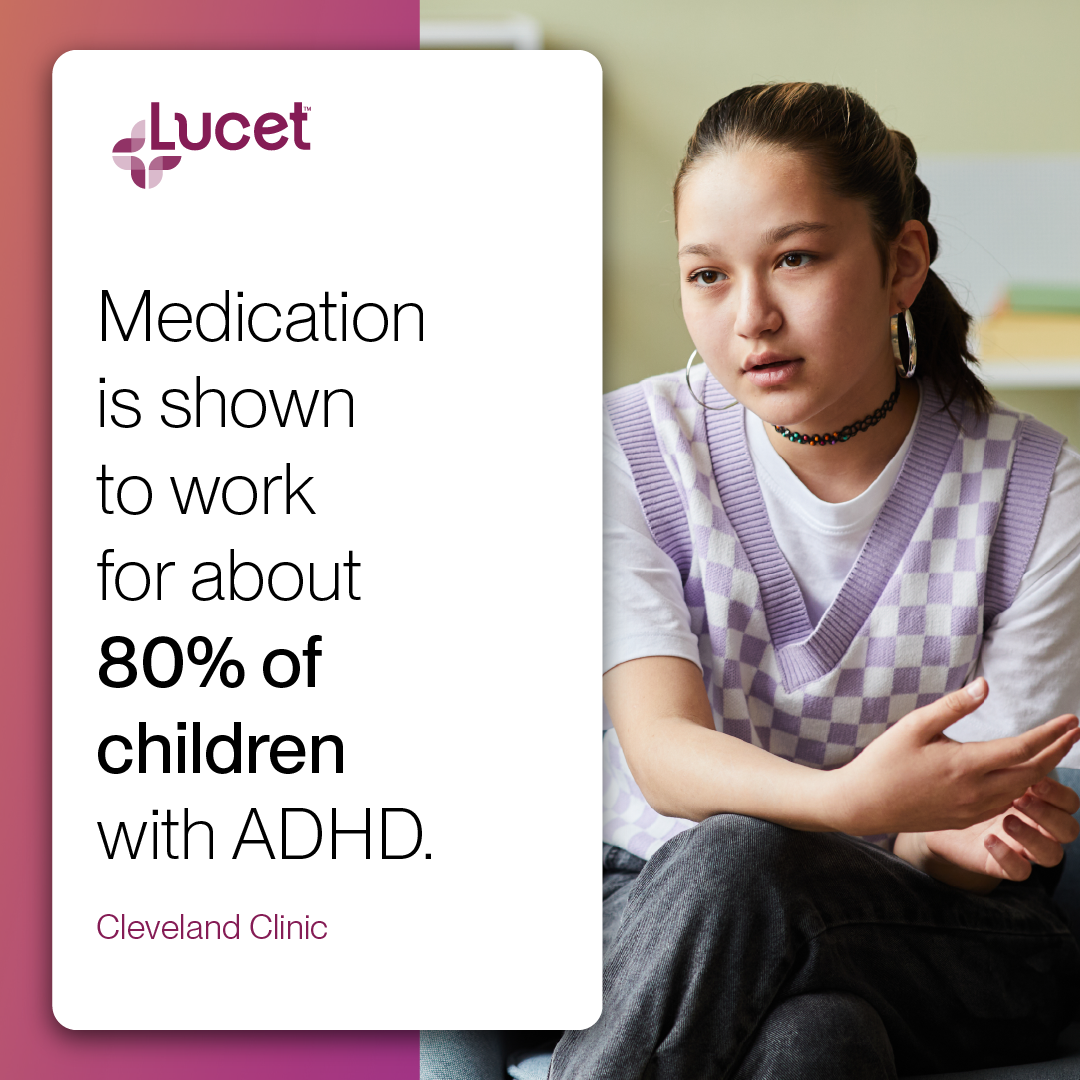
If you or your child has a neurodiverse diagnosis like ADHD, autism or dyslexia, it’s natural to worry about quality of life and what comes next. The encouraging news is that many people thrive with neurodiversity, and there are several options that can support growth and well-being.
Learn more about the range of treatment paths available. Each option is designed to meet unique needs and help a neurodivergent individual succeed in life, if treatment is desired: resources.lucet.health/toolkit-neurodiversity-inclusion-and-advocacy/understanding-treatment-for-neurodiverse-diagnoses
#BehavioralHealth #MentalHealth #Neurodiversity #NeurodiversityChampions #WhatsStrongWithYou
#NeurodiversityChampions #WhatsStrongWithYou
If you or a loved one is curious about neurodiversity or may be neurodiverse, visit Neurodiversity Education Academy for more resources.