


Join the Conversation: Eating Disorder Awareness
February is Eating Disorder Awareness Month
Use the language below when posting about eating disorder awareness on social media. Follow Lucet to see our content and share it on your account. You can also follow the steps below to post from your own account.
Create posts on your social media accounts
- Log in to one of your active social media channels to create a post.
- Scroll below and choose your desired social post language.
- Copy the caption and paste it into your social post editor.
- Right click on the corresponding graphic below to save it to your computer, then upload the graphic to your post to accompany the caption.
- Be sure to tag @LucetHealth. To tag any organizations listed in the caption, type @ in the social post editor, then start typing the desired organization. Choose the organization you want to tag from the dropdown list of pages that appear.
- Include the following hashtag in your caption: #PracticeNourishment #FeedingHope
- Post!
Share Infographic/Entire Toolkit
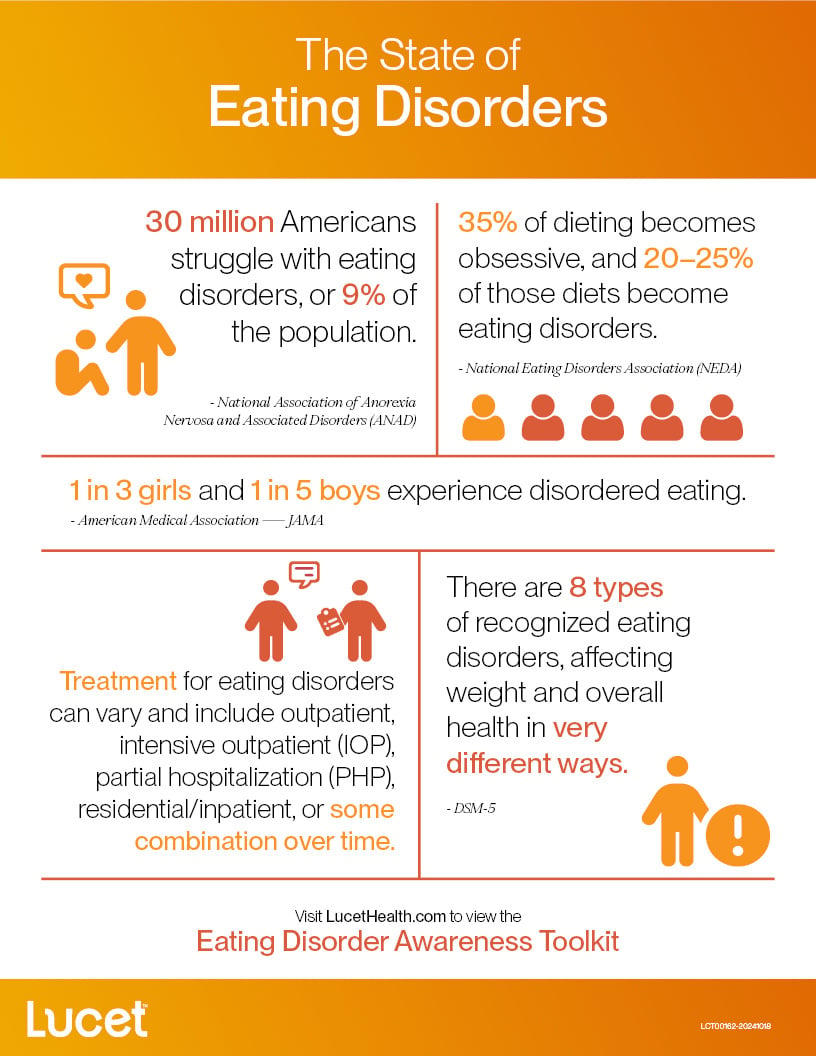
Eating disorders show how closely our minds and bodies are linked. These illnesses can be very serious and even life-threatening. They often start young and can affect people of any age.
February is Eating Disorder Awareness Month. Use these resources to learn the signs, understand the risks, and help prevent the physical and mental harm eating disorders can cause. You can print, share, or post the materials in this toolkit any time: resources.lucet.health/toolkit-eating-disorder-awareness
If you or someone you know is struggling with disordered eating, reach out for help. Call the National Association of Anorexia Nervosa and Associated Disorders (ANAD) Helpline (1-888-375-7767) or National Alliance for Eating Disorders Helpline (1-866-662-1235).
#PracticeNourishment #FeedingHope #EatingDisorders #EatingDisorderAwarenessMonth
Share Tips
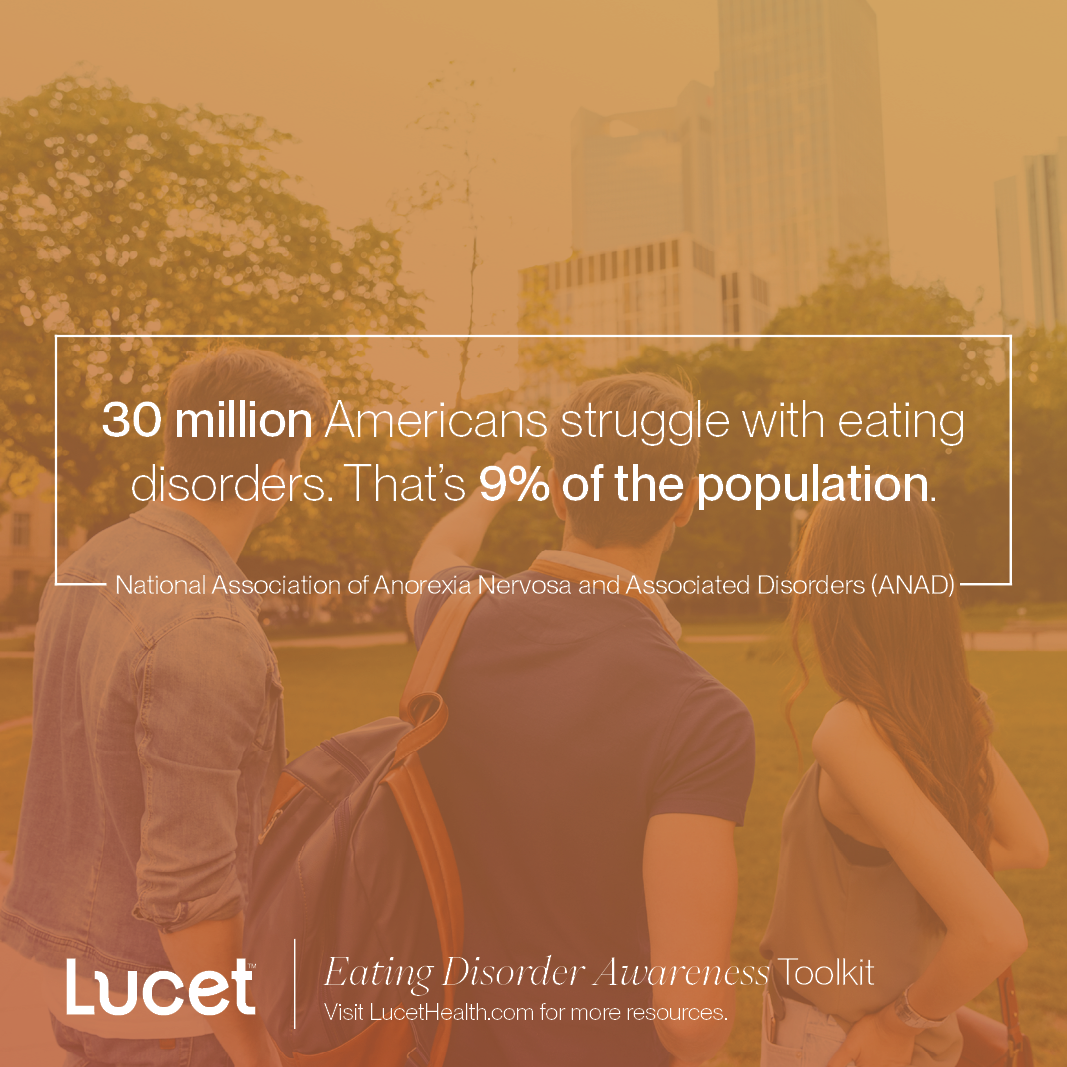
It can be hard to spot an eating disorder. The signs may look like normal dieting and people with eating disorders may not look underweight. Even health care providers can miss the warning signs if they do not see the full picture.
That’s why parents, guardians and loved ones need to speak up if something seems wrong. Here are some signs to watch for: resources.lucet.health/toolkit-eating-disorder-awareness/eating-disorders-know-the-signs
#PracticeNourishment #FeedingHope #EatingDisorders #EatingDisorderAwarenessMonth
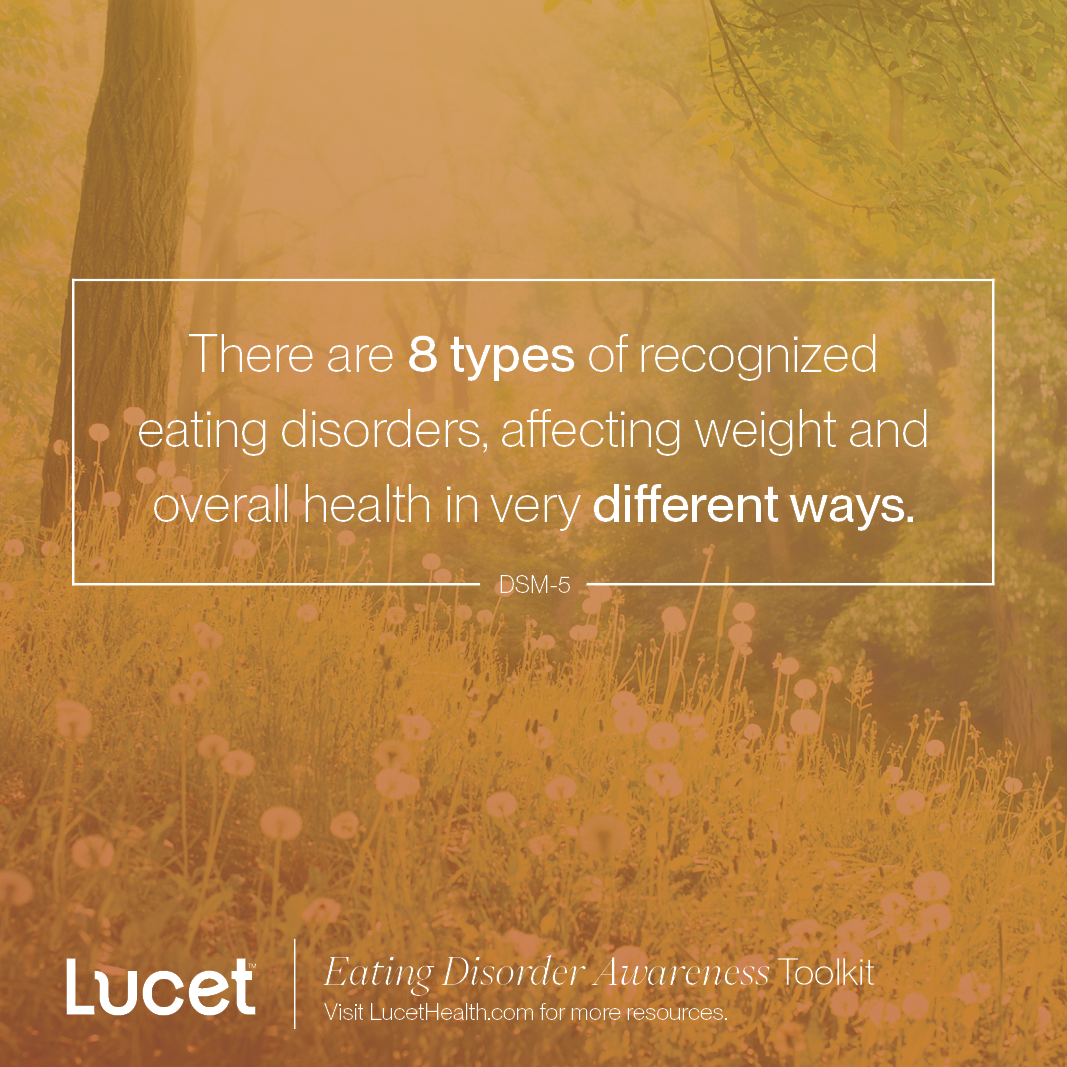
Eating disorders are not just a “refusal to eat.” They can also involve binging, purging or avoiding certain foods or textures. Today, we know these disorders can show up in many ways and can affect how people see and feel about their bodies.
Read more to learn about the different types of eating disorders and what each one may look like in you or someone you care about: resources.lucet.health/toolkit-eating-disorder-awareness/understanding-types-of-eating-disorders
#PracticeNourishment #FeedingHope #EatingDisorders #EatingDisorderAwarenessMonth
Share Articles
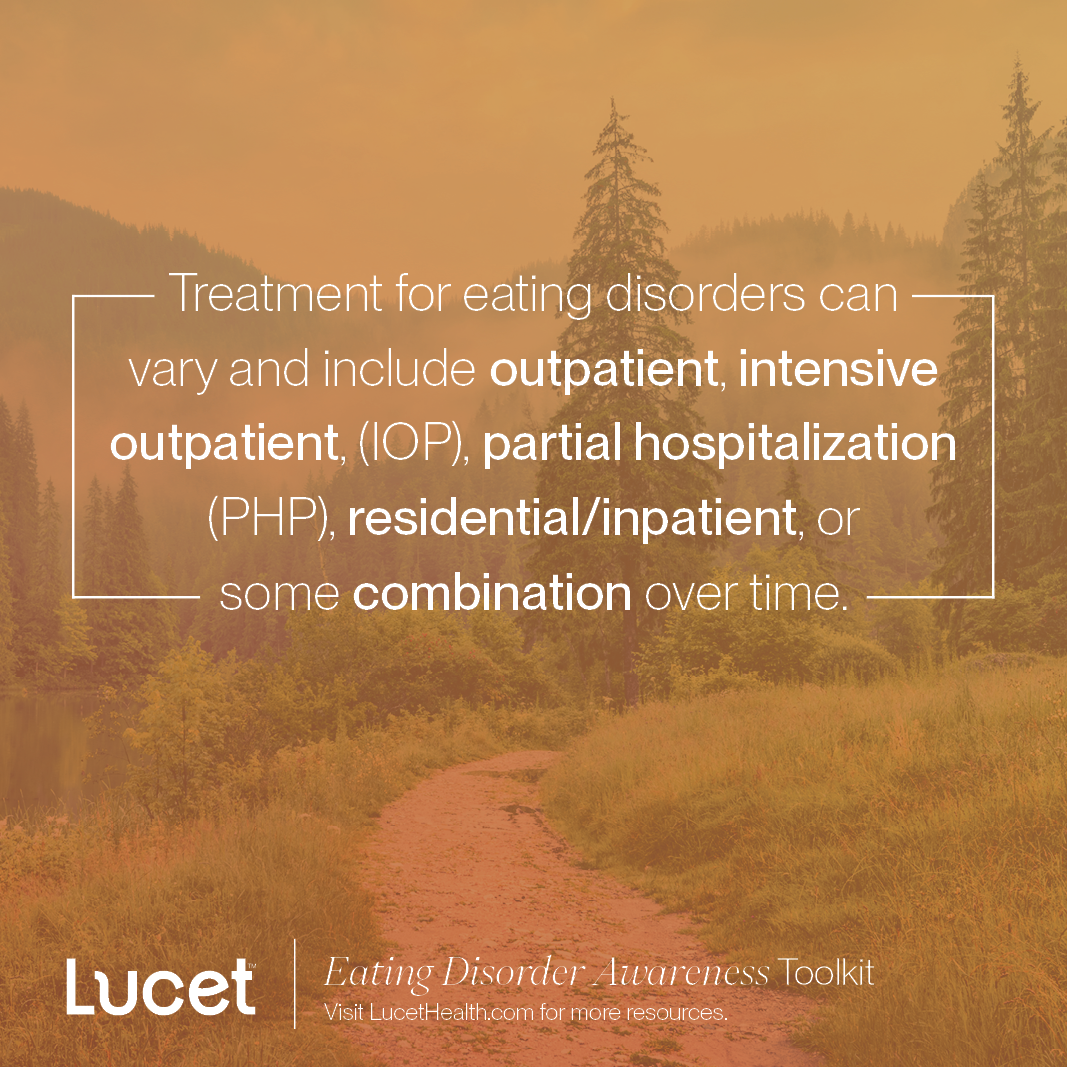
Eating disorders are complex, and each person may need a different type of care. Treatment may include talk therapy, intensive outpatient programs, inpatient care or a mix of these options. The goal is to support each person’s symptoms and how they see their body.
If your child or loved one is getting ready for treatment, it helps to know the challenges they may face. It’s also important to understand what to expect both emotionally and physically. Learn more: resources.lucet.health/toolkit-eating-disorder-awareness/what-to-expect-during-eating-disorder-treatment
#PracticeNourishment #FeedingHope #EatingDisorders #EatingDisorderAwarenessMonth
One of the hardest parts of spotting an eating disorder is seeing the line between normal dieting or healthy habits and disordered eating. Loved ones who know a person’s daily routines and how they feel about their body are often the first to notice when something is wrong.
Learn about the difference between healthy and unhealthy eating habits: resources.lucet.health/toolkit-eating-disorder-awareness/when-does-dieting-become-unhealthy
#PracticeNourishment #FeedingHope #EatingDisorders #EatingDisorderAwarenessMonth
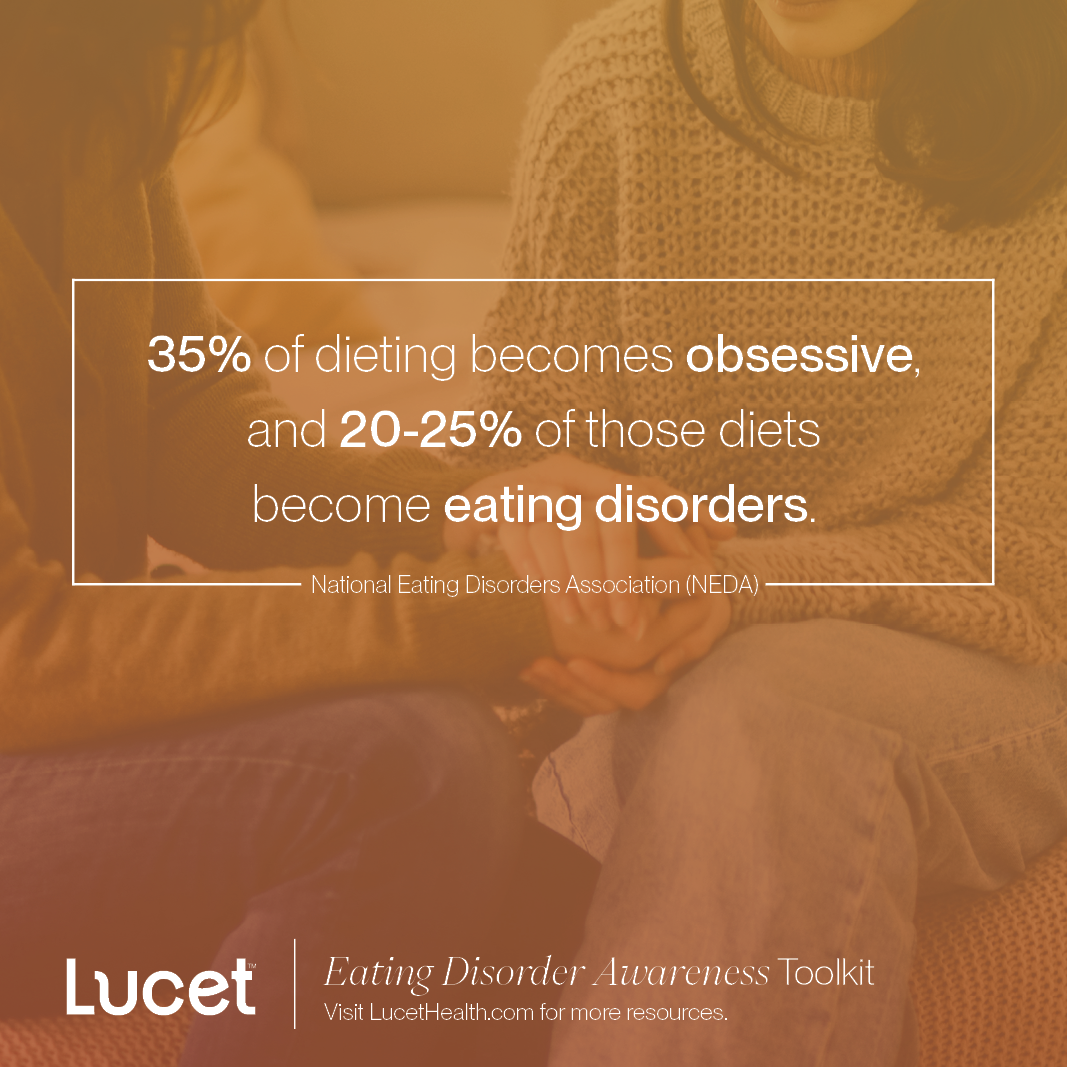
#PracticeNourishment #FeedingHope
If you or someone you know is struggling with disordered eating, contact the National Association of Anorexia Nervosa and Associated Disorders (ANAD) Helpline (1-888-375-7767) or National Alliance for Eating Disorders Helpline (1-866-662-1235).