


Speaking to Someone with Trauma
Trauma affects people in different ways. Some people recover with time. Others may carry emotional, mental or physical effects that last for years (National Institutes of Health). Trauma can show up not only through emotions, but also through chronic pain, headaches or stomach problems.
Trauma is not only defined by a diagnosis like post-traumatic stress disorder. PTSD represents just one part of a wide range of reactions people may have after a distressing event. Many people who do not meet the criteria for PTSD still experience sadness, anger, fear or disconnection that affects their daily lives.
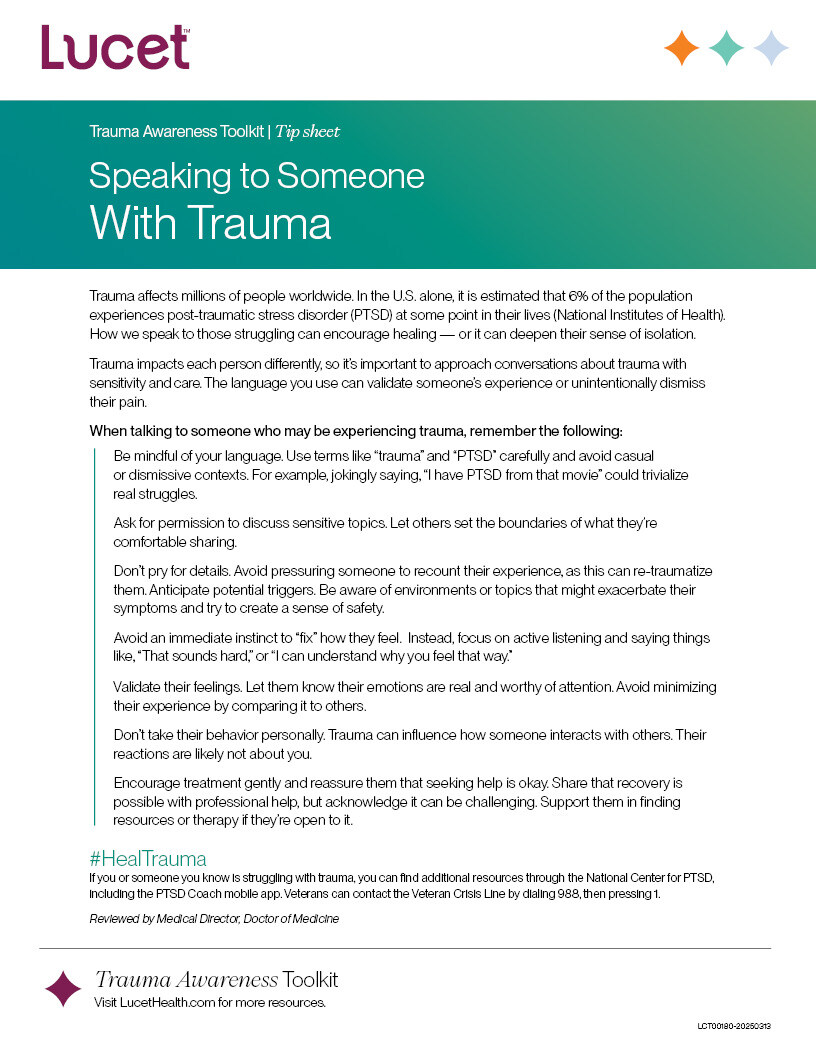
Here are some helpful tips for talking with someone who may be dealing with trauma:
- Use careful language Use words like “trauma” and “PTSD” with respect. Do not use them in jokes or casual comments. Saying something like “That movie gave me PTSD” can make light of a real condition.
- Ask before discussing sensitive topics Give the other person control. Ask if they want to talk about what they are going through. Let them choose what they are ready to share.
- Do not ask for details Avoid asking for a full account of what happened. This can force them to relive the event. Let them share only what they feel safe sharing.
- Watch for possible triggers Be aware of topics or situations that could cause stress. Try to create an environment that feels calm and safe.
- Avoid trying to “fix” their feelings You cannot solve their pain in the moment. Focus on listening. Simple statements like “That sounds really hard” or “I can see why you feel that way” can help.
- Validate their emotions Let them know their feelings matter. Do not compare their experience to someone else’s. Avoid saying things like “It could be worse.”
- Do not take their reactions personally Trauma can affect how someone behaves. If they seem distant, upset or unsure, remember it may be part of their trauma response, not a reaction to you.
- Encourage treatment gently Let them know that seeking help is okay and that recovery is possible. Offer support in finding resources or a mental health professional if they want help, but do not push.
#HealTrauma
If you or someone you know is struggling with trauma, you can find additional resources through the National Center for PTSD, including the PTSD Coach mobile app. Veterans can contact the Veteran Crisis Line by dialing 988, then pressing 1.
Reviewed by Medical Director, Doctor of Medicine
#HealTrauma
If you or someone you know is struggling with trauma, you can find additional resources through the National Center for PTSD, including the PTSD Coach mobile app. Veterans can contact the Veteran Crisis Line by dialing 988, then pressing 1.