


How Mental Health Affects the Whole Family
Mental health challenges rarely affect only one person. When someone in a family struggles, stress often spreads to others. This can make life harder for the whole household.
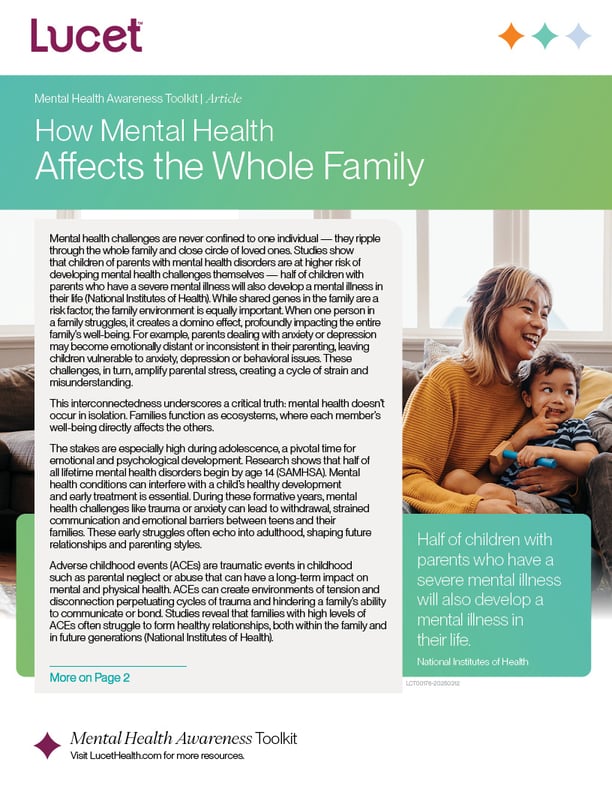
When a parent has a mental health condition, children may feel confused or worried. A parent who feels anxious or depressed may have trouble showing support or staying consistent. This can lead to fear or behavior problems in children. As kids struggle, the parent may feel even more stress. This can create a cycle that is difficult to break.
Families are deeply connected. What affects one person can affect everyone. Teens are at a sensitive stage. Many mental health conditions start before age 14. When teens deal with stress, trauma or anxiety, they may pull away from their families. They may have trouble talking about their feelings. These early challenges can continue into adulthood and shape future relationships.
Many children experience trauma known as adverse childhood experiences, or ACEs. ACEs include things like neglect or abuse. These events can affect a child’s health for many years. ACEs can also make it harder for families to communicate or feel close.
Family therapy can help change these patterns. Therapy can teach families how to solve problems, talk more openly and lower stress. It can help each person understand how their actions affect others. When families support each other, healing becomes easier.
Look for treatment that includes the whole family. Working together can help break cycles of stress and trauma. With therapy and open conversations, families can build better communication and stronger relationships.
#MentalHealthMatters
If you or someone you know is struggling with mental health issue, help is out there. Contact the Mental Health America 24/7 Crisis Text Line (Text MHA to 741-741).