


Staying Connected During Recovery
Staying Connected During Recovery
One of the biggest challenges during recovery is figuring out how to stay connected with the people in your life. In the past, people were often told to stop spending time with anyone who was not sober. For some people, that may help. For others, it can lead to loneliness and isolation, which can make recovery more difficult. Spending time with friends and family is an important part of life. That does not change during recovery. In fact, having a strong support system can be more important than ever. When people feel supported, understood and cared for, they are often better able to stay focused on their recovery goals.
Finding Supportive People
What matters most is not whether someone drinks alcohol. What matters is whether they respect your recovery.
Think about the people in your life. Do they support your goals? Do they respect your decision not to use substances? Do they listen when you set boundaries?
Some supportive friends may still have a drink at a party from time to time. If they care about you and encourage your recovery, they can still be an important part of your life.
On the other hand, if someone pressures you to use substances or makes you feel bad about changing, that relationship may not be helping your recovery right now.
Learning how to manage relationships during recovery is a skill that takes time. Many people find it helpful to talk with a trusted mentor, religious leader, counselor or therapist. These people can help you work through the challenges that sometimes come with changing relationships.
Learning to Be Around Substances
Part of recovery may include learning how to be around substances without using them yourself. This skill takes time, patience and practice.
You may attend a birthday dinner where people order drinks or go to a cookout where others are drinking beer. Before going, it is important to think about your comfort level and have a plan if you begin to feel stressed or tempted.
Pay attention to how you are feeling. If you start to feel a strong urge to use substances, tell a trusted friend and leave if needed. Protecting your recovery should always come first.
If you work with a sponsor, it can help to check in before and after events where alcohol or other substances may be present. Talking about your concerns and experiences can provide extra support and encouragement.
When you spend time with people who respect your choices, social events can help you feel connected and included. They can remind you that you are still able to enjoy life, even when you choose not to use substances.
Recovery is about learning how to live a healthy and fulfilling life. With the right support, you do not have to choose between protecting your recovery and staying connected to the people who matter most.
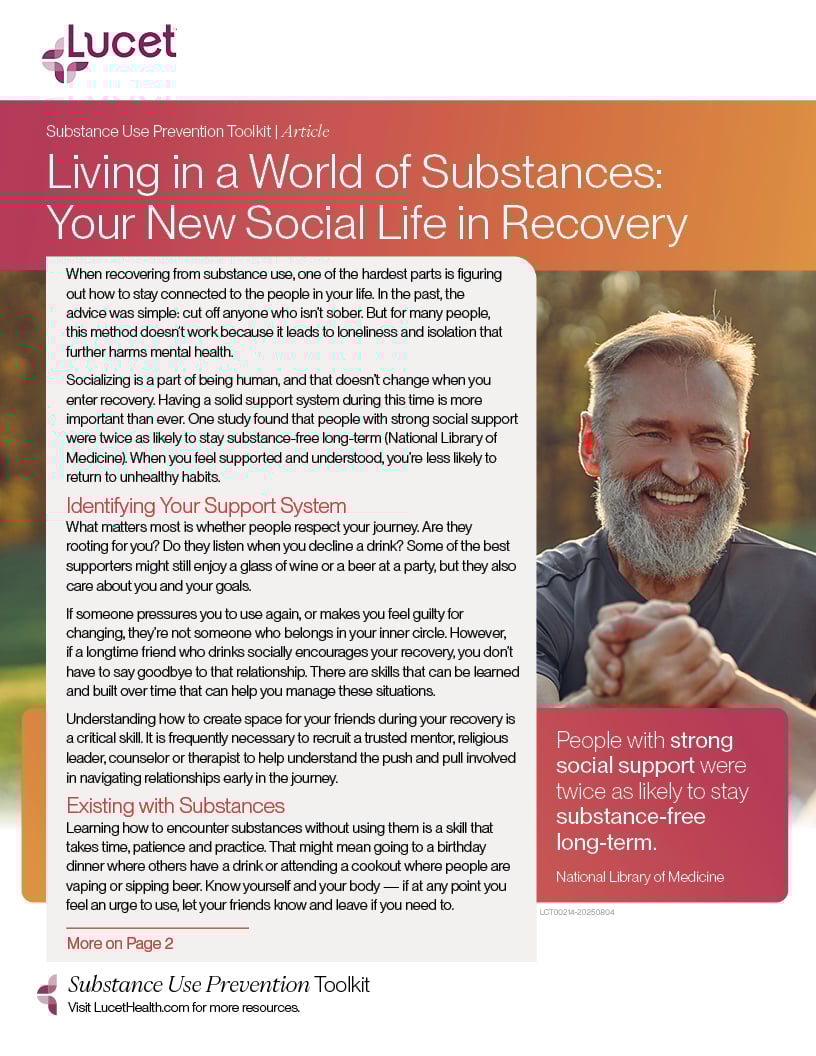
#SupportSobriety #RealRecovery
If you or someone you know is struggling with substance use or addiction, call the Substance Abuse and Mental Health Services Administration (SAMHSA) National Helpline at 1-800-662-4357.