


A Guide to Inclusive Language
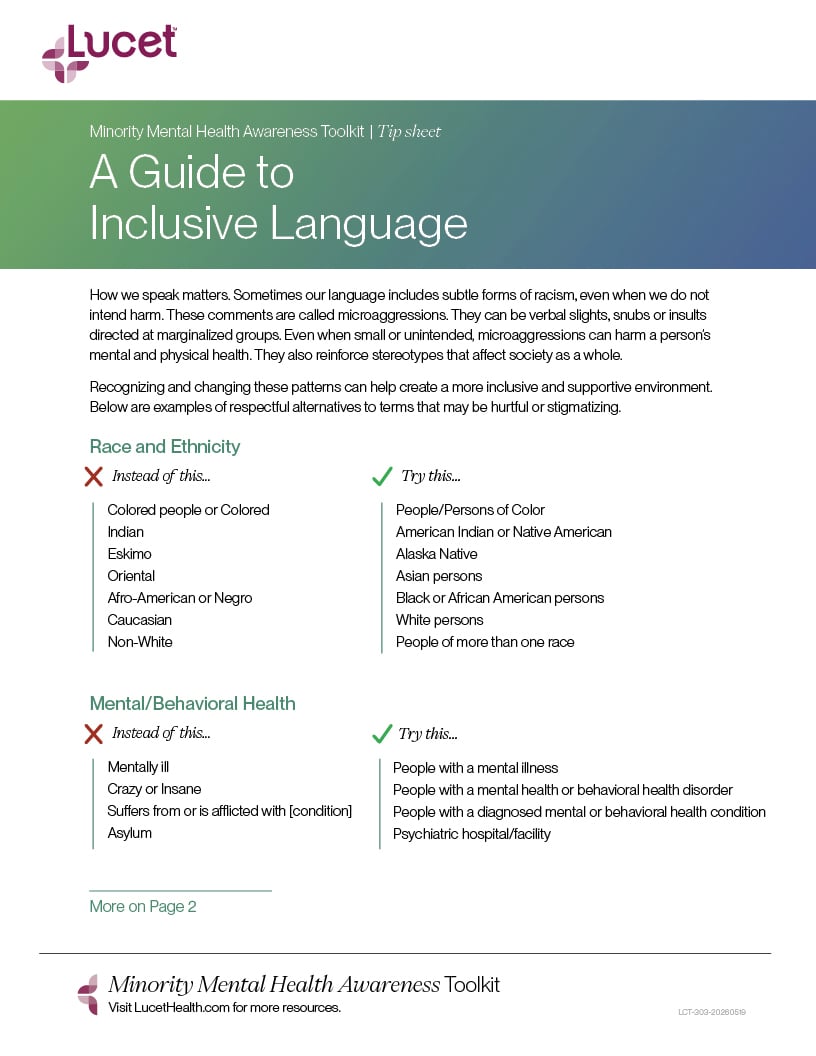
How we speak matters. Sometimes our language includes subtle forms of racism, even when we do not intend harm. These comments are called microaggressions. They can be verbal slights, snubs or insults directed at marginalized groups. Even when small or unintended, microaggressions can harm a person’s mental and physical health. They also reinforce stereotypes that affect society as a whole. Recognizing and changing these patterns can help create a more inclusive and supportive environment. Below are examples of respectful alternatives to terms that may be hurtful or stigmatizing.
Race and ethnicity
Instead of terms like this...
- Colored people or Colored
- Indian
- Eskimo
- Oriental
- Afro-American or Negro
- Caucasian
- Non-White
Try this...
- People/Persons of Color
- American Indian or Native American
- Alaska Native
- Asian persons
- Black or African American persons
- White persons
- People of more than one race
Mental/behavioral health
Instead of terms like this...
- Mentally ill
- Crazy or Insane
- Suffers from or is afflicted with [condition]
- Asylum
Try this...
- People with a mental illness
- People with a mental health or behavioral health disorder
- People with a diagnosed mental or behavioral health condition
- Psychiatric hospital/facilityImmigration status
Immigration status
Instead of this...
- Illegals
- Illegal immigrants
- Illegal aliens
- Illegal migrants
- Foreigners
- The foreign-born
Try this...
- People with undocumented status
- Mixed-status households
- Immigrant or migrant
- Asylum seeker or people seeking asylum
- Refugee or refugee populations
- Non-U.S.-born persons or foreign-born persons
Socioeconomic status
Instead of this...
- Poverty-stricken
- The poor/poor people
Try this...
- People with lower incomes
- People/households with incomes below the federal poverty level
- People with income in the lowest bracket
- People experiencing poverty
#MinorityMentalHealthMatters #NotaCharacterFlaw
If you or someone you know is struggling with mental health issue, help is out there. Contact the Mental Health America 24/7 Crisis Text Line (Text MHA to 741-741).